
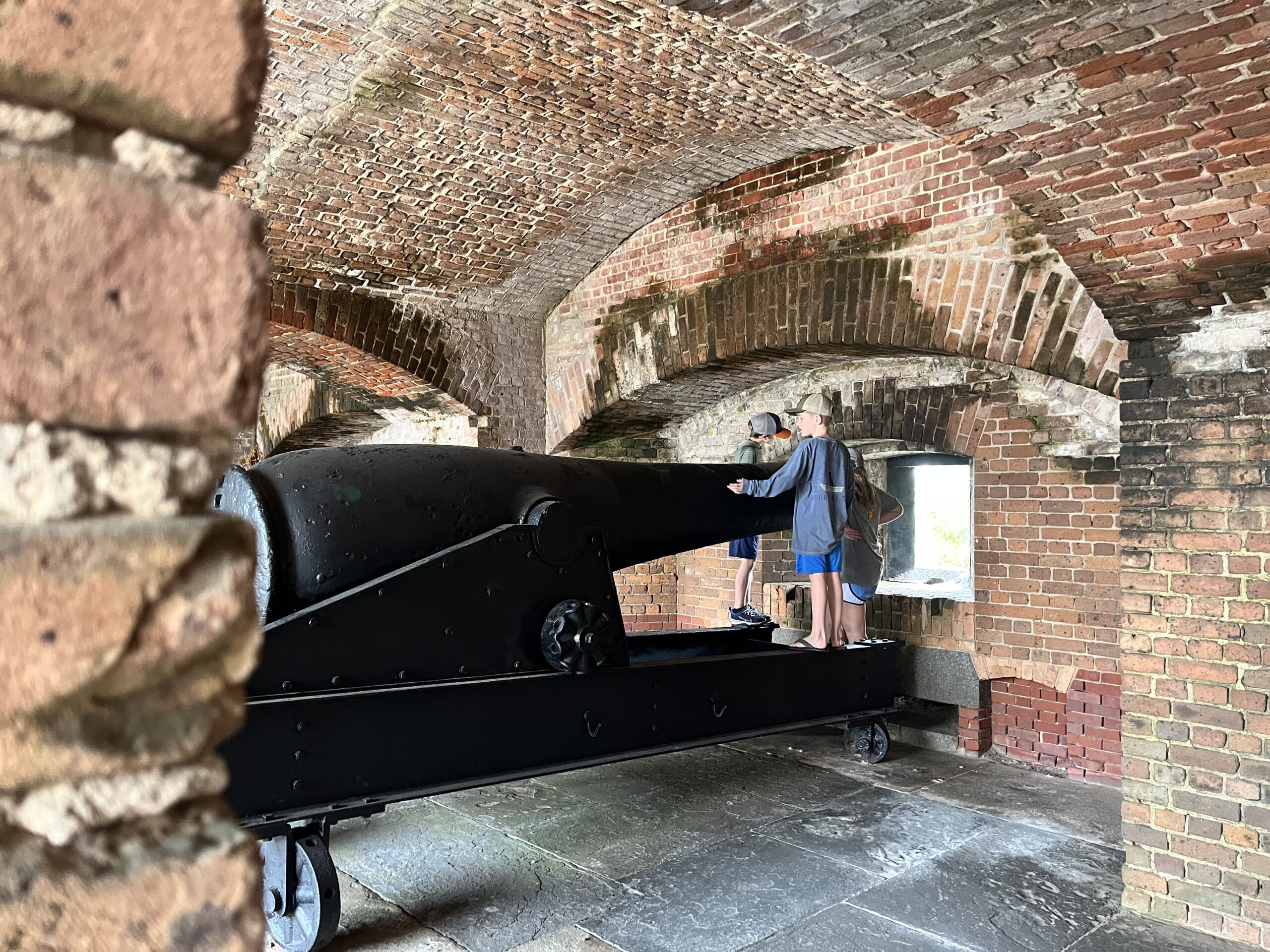


We’ve been talking about it a lot on the blog recently, but traveling with kids isn’t always about giving them kid-centered activities. Sure, sometimes a day at a theme park is the exact fun that your family needs, but it isn’t the only thing kids can be expected to do – and enjoy. Traveling and exploring historic sites with kids is one of the ways we can help them build an awareness of people, cultures and times outside of their own.
Let’s talk about why – and how – we can explore historic sites with our kids.
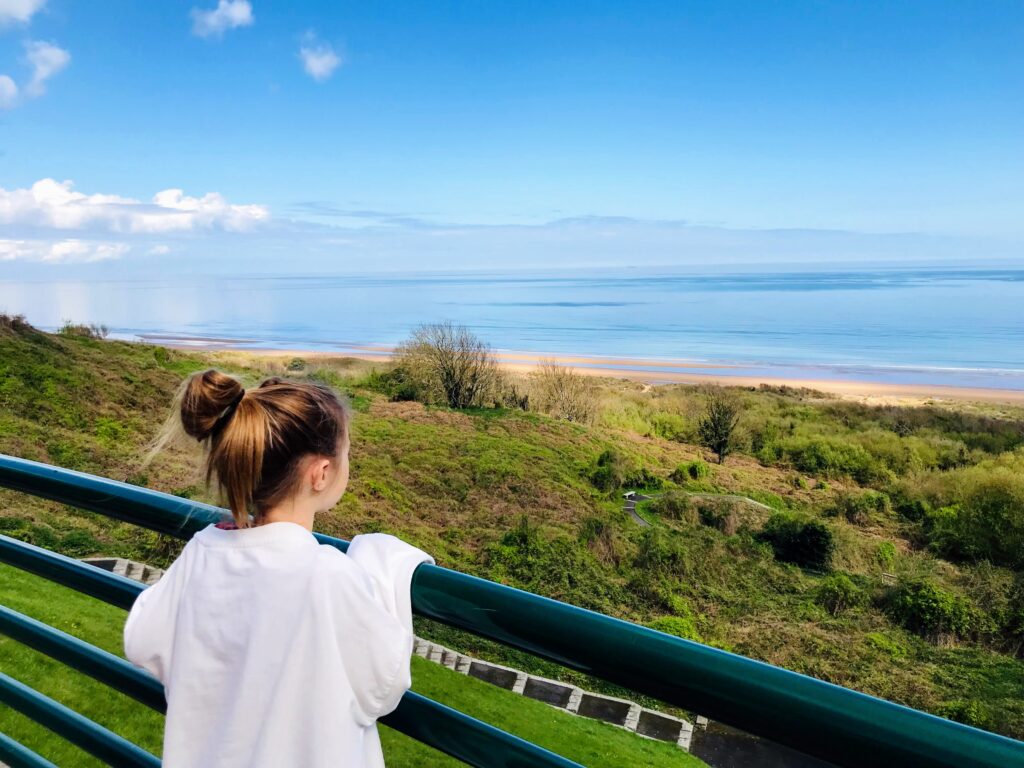
My daughter looking out over Omaha Beach in Normandy, France
“I want to avoid historic sites because…”
My kids will get bored and complain.
They’ll run around and I’ll spend the whole time telling them to behave.
It’s too depressing.
They won’t remember it anyways.
Who wants to turn vacation into school?
All legitimate concerns. And let’s be honest, traveling to historic sites may not always be the easiest choice. But we think the benefits are numerous.
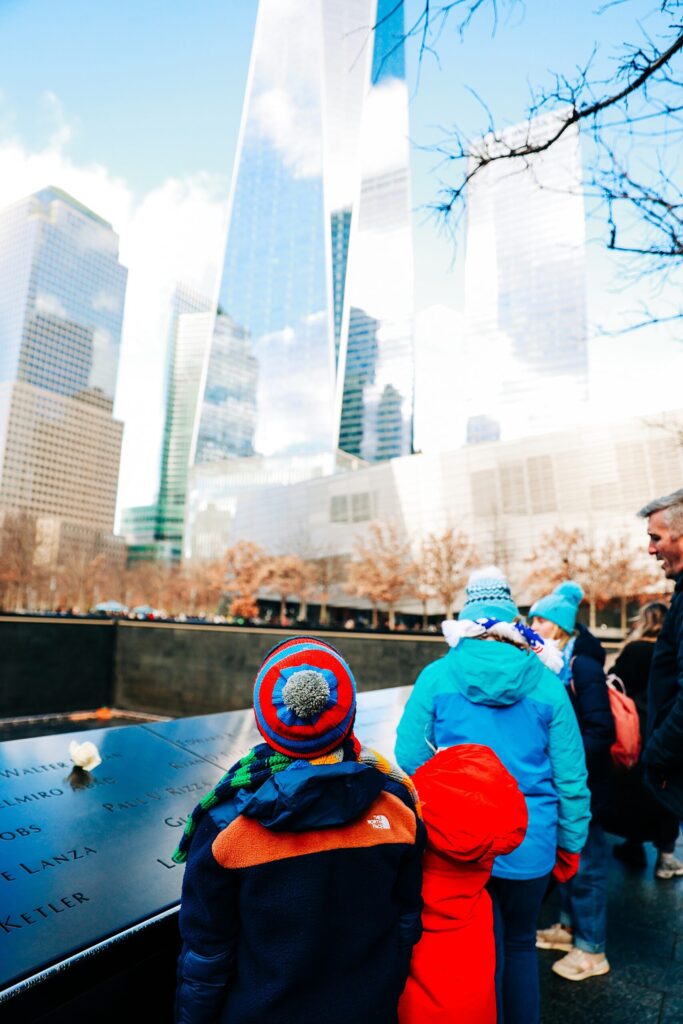
Taking in the 9/11 Memorial in New York City
Visiting historical sites makes history come alive
Depending on your child’s age, this may happen in different ways.
For a small child, it’s in the wildflowers growing on the battlefield.
For a seven-year-old, it’s imagining themselves as a servant in the castle kitchens.
For a teenager, it’s standing in a real place that they’ve only ever read about in a textbook.
A historic site gives children something a book can’t quite provide: a sense of place.
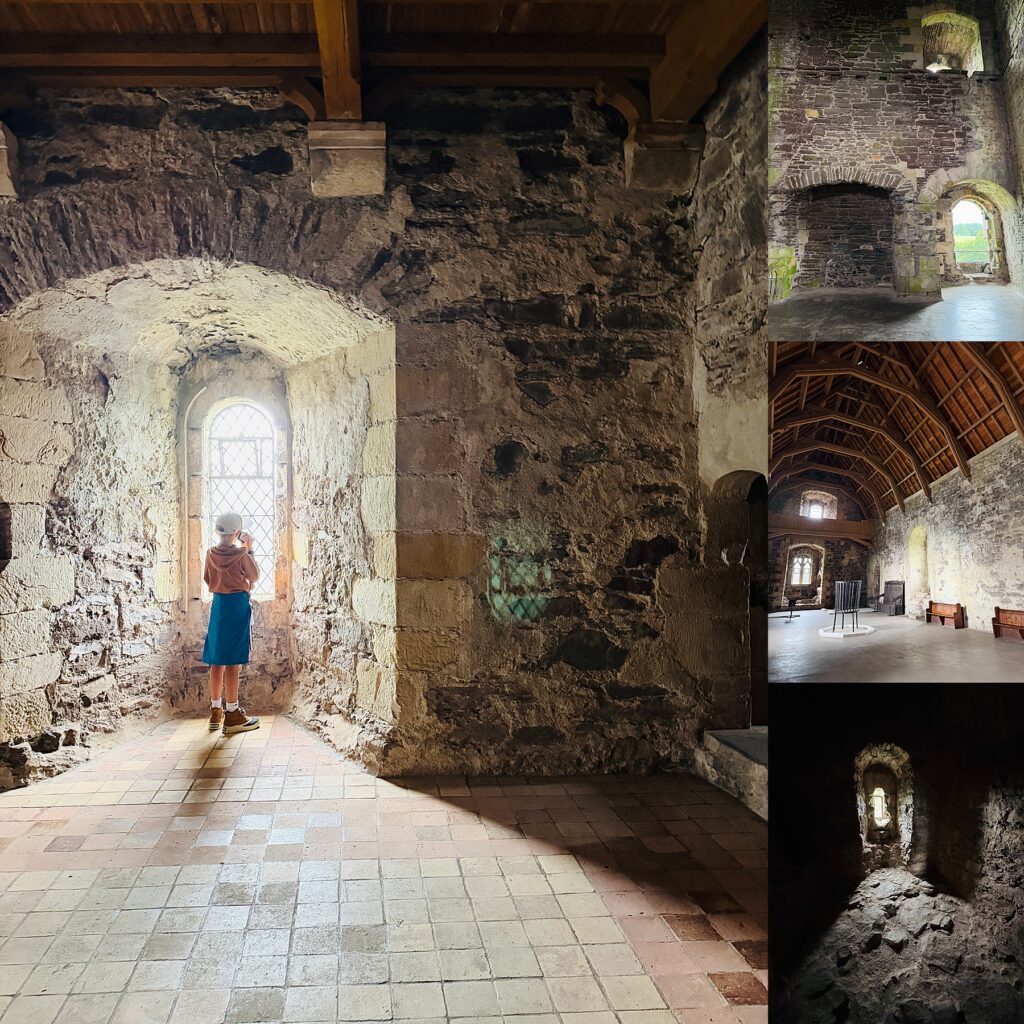
Exploring Doune Castle in Scotland
History becomes something that happened to real people, in real places, rather than simply a collection of dates and names to memorize.
And that can create perspective and build an interest in learning about the past – both the good and the bad. Historic places asks children to consider what leads to war and conflict, what choices people make when faced with difficult circumstances and what kind of person they would want to be in the situation presented to them.
They’re asked to summon compassion and empathy for people with lives maybe similar to or completely different from their own. Those are alll good skills and important attributes. Maybe, just maybe, that makes it worth putting up with a little complaining along the way.
It’s good to ask kids to think outside of their own time and place
Kids are so prone to dwell only on their immediate gratification and desires. That’s not necessarily a bad thing—they’re kids! But part of growing up is learning to look beyond ourselves.
Asking them to place their minds into a different way of thinking, to consider another’s lot in life, to ponder the challenges someone else may have faced and, yes, even to put up with a little boredom, are all GOOD things!
Historic sites give us a natural opportunity to grow those muscles.
We can ask our kids to imagine what a person’s life might have been like in that setting. What did they eat? Where did they sleep? What would they have done in this situation? What would it have been like to be their age during this particular time?
These questions don’t have to become a formal lesson. Sometimes simply standing in a place and wondering together is enough.
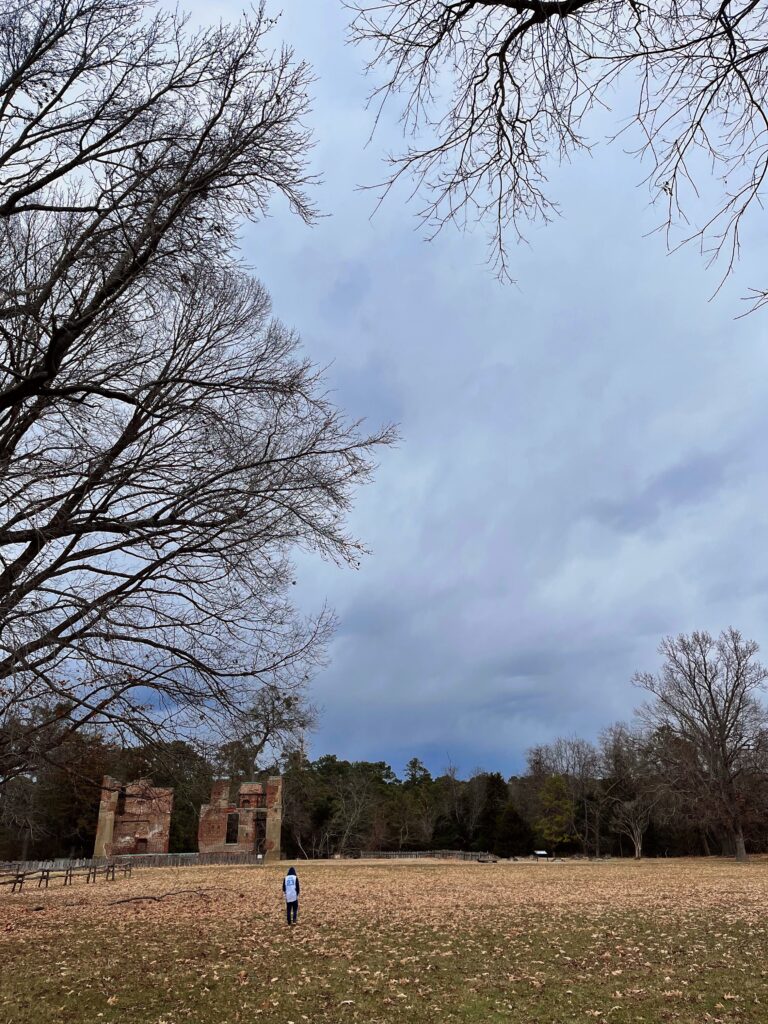
Walking the Historic Jamestown Site in Virginia
Boredom isn’t necessarily the enemy
With all of this said, sometimes my kids are still bored at historic sites.
In fact, sometimes they’re very bored.
However, I find that they almost always find something that interests them, something that captivates their mind and sticks. They almost always walk away with questions and memories of that place.
It ultimately doesn’t matter if they remember every detail and date, but that they exercised muscles that they didn’t the day before and learned to care just a bit more about humanity.
We don’t need to make every experience entertaining for our kids in order for it to be worthwhile.
There is value in asking children to pay attention when something isn’t immediately designed to hold their attention. There is value in letting them experience a little boredom, in asking them to be patient, and in giving them the opportunity to discover something interesting for themselves.
We don’t have to make our children miserable. But we also don’t have to assume that an experience isn’t worthwhile simply because they aren’t entertained every minute.

Visiting the Reichstag in Berlin, Germany
Our world needs youth who understand the past…
Of course, no child or adult can ever have a full understanding of the past, but creating an interest in your kids for learning what they can about history is a great gift you can give them.
This doesn’t mean that you have to shove history down their throats, but simply take the opportunity when you can to exhibit that your family cares to know and understand the past in order to be better citizens of the world.
We want our kids to understand that the world they live in has a history.
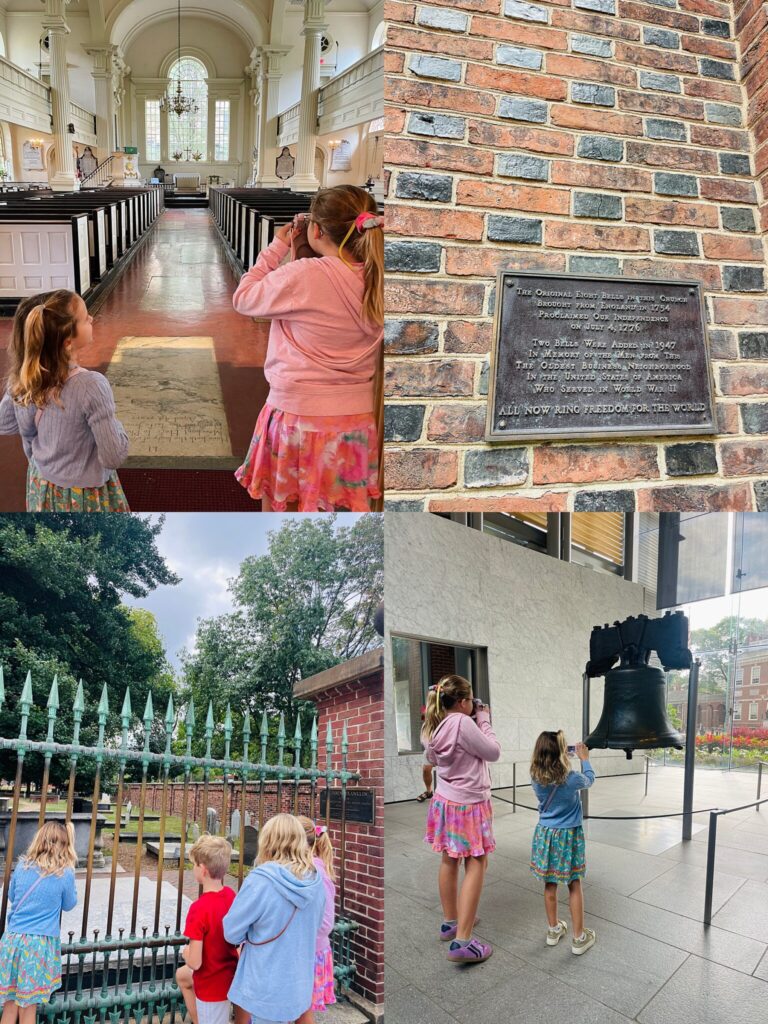
A day of historic sites in Philadelphia, PA
We want them to be curious about the people who came before them, to recognize that their own experience isn’t the center of the world, and to understand that people in other times and places faced challenges and joys that were very different from their own.
We’re not going to create little historians by taking them to historic sites.
But we can help create children who are curious, who ask questions, who practice empathy, and who understand that the world is bigger than their own immediate experience.
That’s worth doing.
Some tips for traveling historic sites with kids
If we believe that our kids can participate in the world rather than needing the world constantly adapted for them, how do we actually make historic sites work with children?
Here are some things we’ve found helpful.
Prepare your kids beforehand
Access material related to the site you’re visiting from your local library or on a streaming service. There are so many great book and graphic novels for kids about historic events these days, and having a few of these in hand always make for more interesting conversations with my kids at the actual sites.
They will recognize things they have read about or offer up thoughts they had from reading, and I love that. Older kids may appreciate a documentary or movie set during the appropriate time period.
They don’t need to be experts, they just need a gateway into the story.
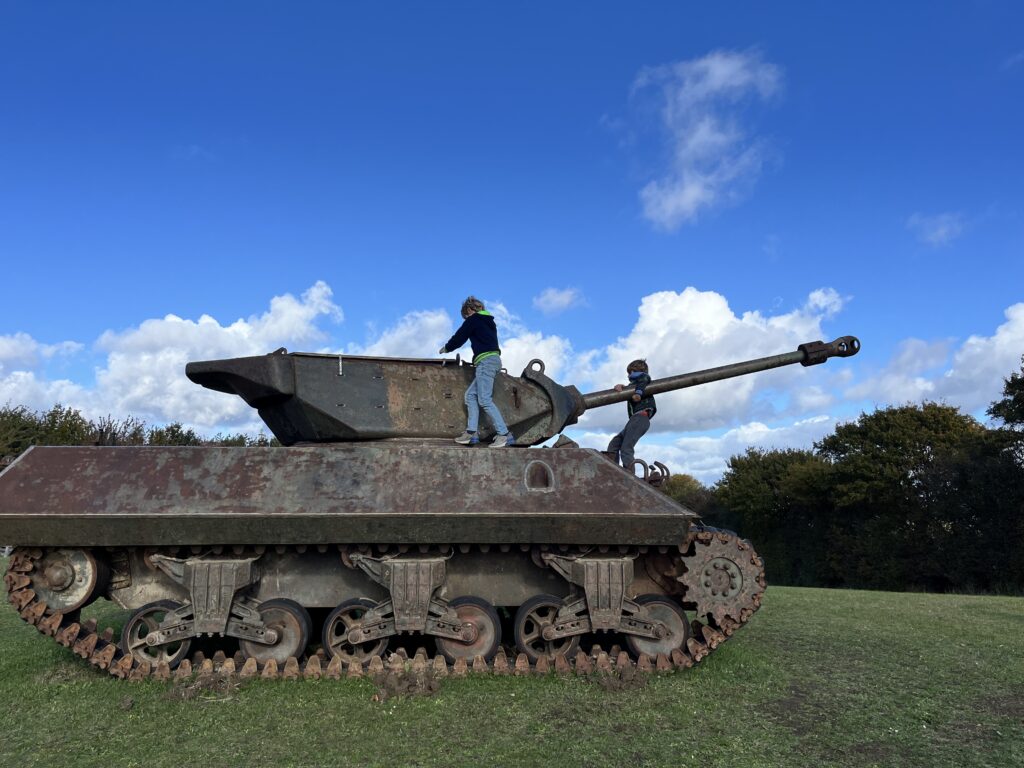
Cold War-era Langeland Fort in Denmark
Plan the timing of your visit carefully
Especially important if you have young kids, but consider if your kids do best early in the morning, or after nap time, or whatever else suits them. Don’t try to take on a historic site in their more restless times, when they’re hungry or tired – it’s a recipe for disaster and will turn you off from trying again the future.
Travel with snacks and water on hand. Don’t let your visit be ruined by the fact that someone was hungry.
Know your limits
Your kids will not want to read hours of information in the museum.
Yes, they will want to see artifacts and look at pictures or take on interactive exhibits, but they will not want to read every placard, and that’s ok! That does not mean you’re failing.
Let them take on history in their way. If you find something particularly interesting that you want to share with them, bring them back to that place and read the information to them, asking questions to make sure they understand the impact of what you’re saying. Sometimes the number of words can overwhelm them, but it doesn’t mean that they’re not interested.
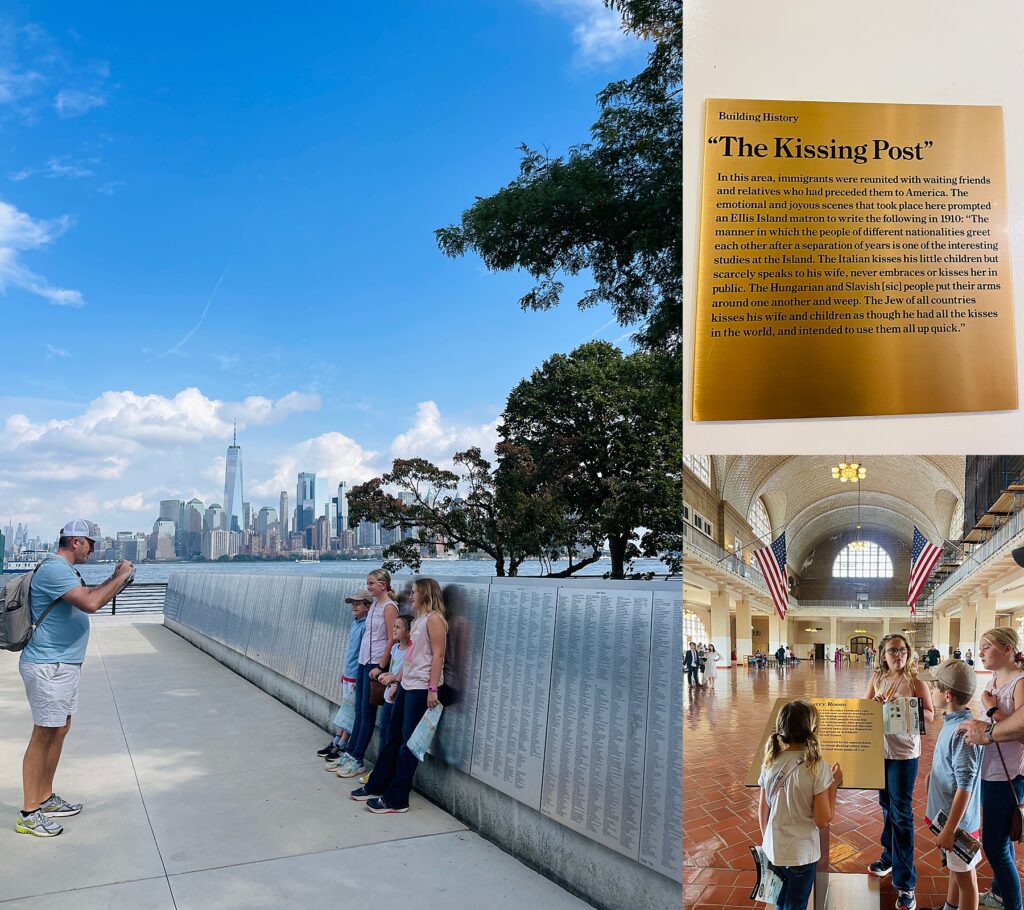
Ellis Island lessons on immigration and family history
Point out places where certain things happened. Ask them to imagine what they would’ve done in that situation.
Also give yourself permission to both ask them to wait and to cut out when the time seems right. If you want to read more, ask them to exhibit patience. If you can tell the mood is souring and you feel good to go, then go and be satisfied with what you were able to take in.
Consider the nature of the site
Of course, not every historic site is appropriate for all ages. If the site is sensitive (of a violent nature), it’s always wise to check out the recommended age for visitors. We always want to respect the wishes of the site, as these guidances are usually created with the help of survivors of the site.
Most sites that we have visited with particularly sensitive exhibits or sections are sure to let you know when you arrive, but always feel free to ask staff to recommend what’s best for kids. So often, historic sites have special programs just for kids, to make the site accessible for them. Always take advantage of this, because even a small fact gained is worth it.
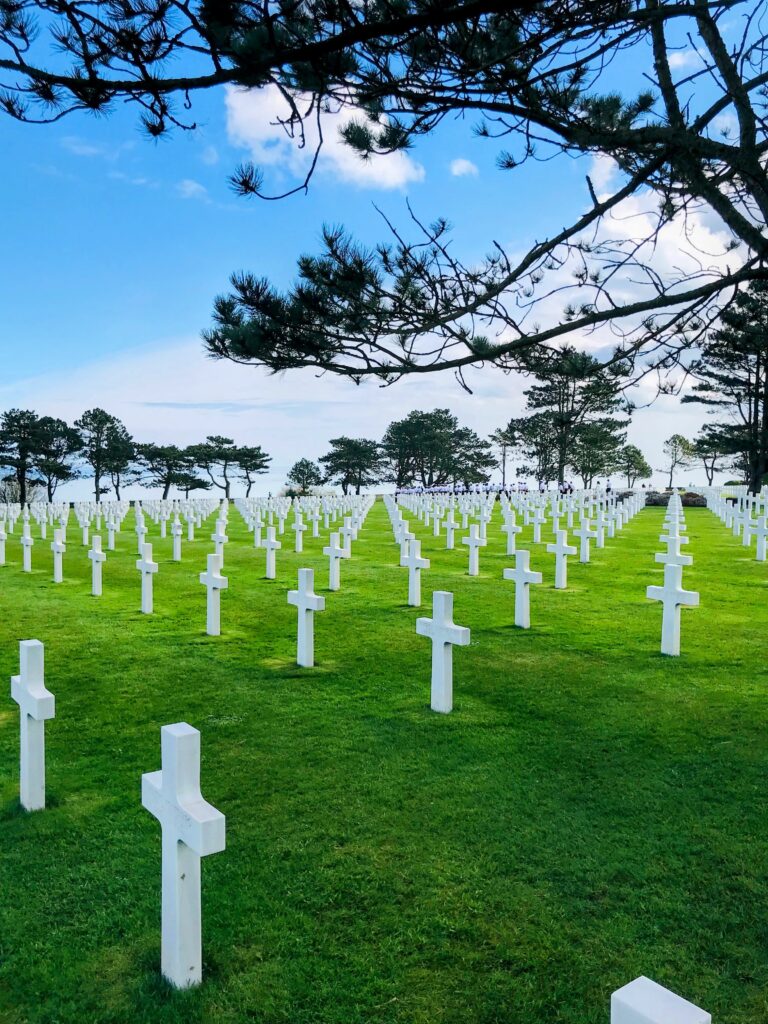
The American Cemetery at Omaha Beach
Ask questions and set an example
Share what you’re thinking of and how you are feeling about what you’re taking in.
Imagine out loud with your kids about what a person’s life might have been like in that setting.
Share information that you gained with one another and keep the conversation going after you leave the site. Show your kids that you’re interested.
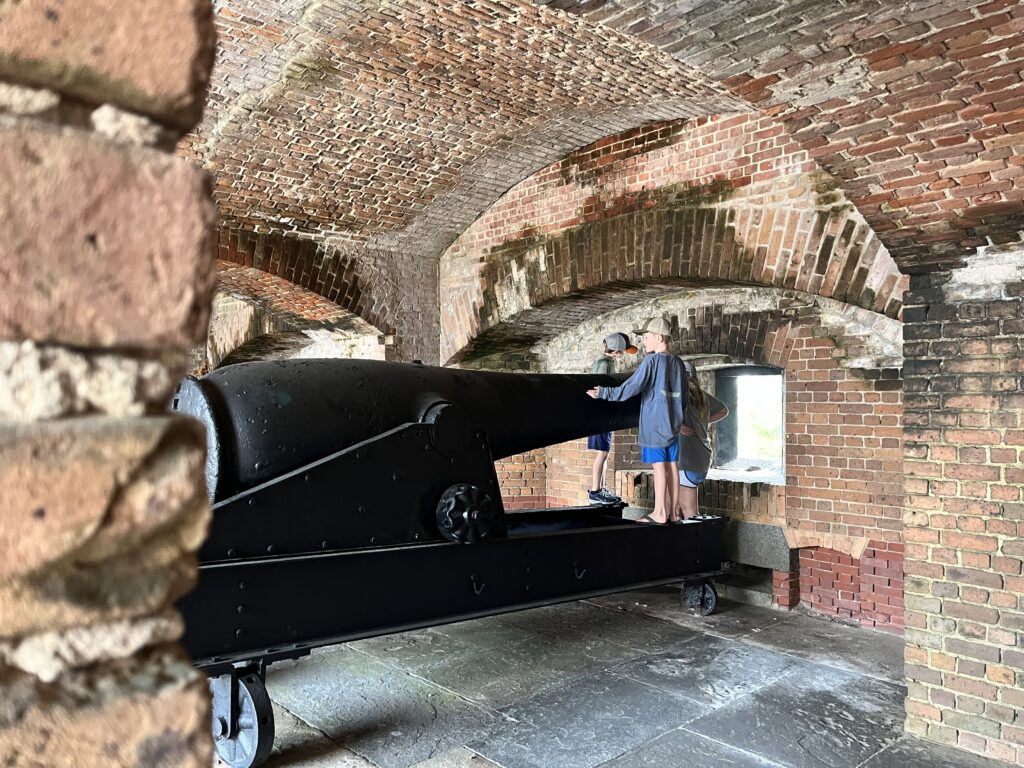
Fort Zachary Taylor in Key West, FL
Don’t Make Every Day About History
Finally, don’t make every day about history if it doesn’t work for your family.
Visiting a historic site can be a half-day activity that is followed up by an afternoon on the beach or running around a city park.
Variety is truly important for everyone in the family.
The goal isn’t to turn your vacation into a history course. It’s to make room for experiences that stretch your children beyond their ordinary world.
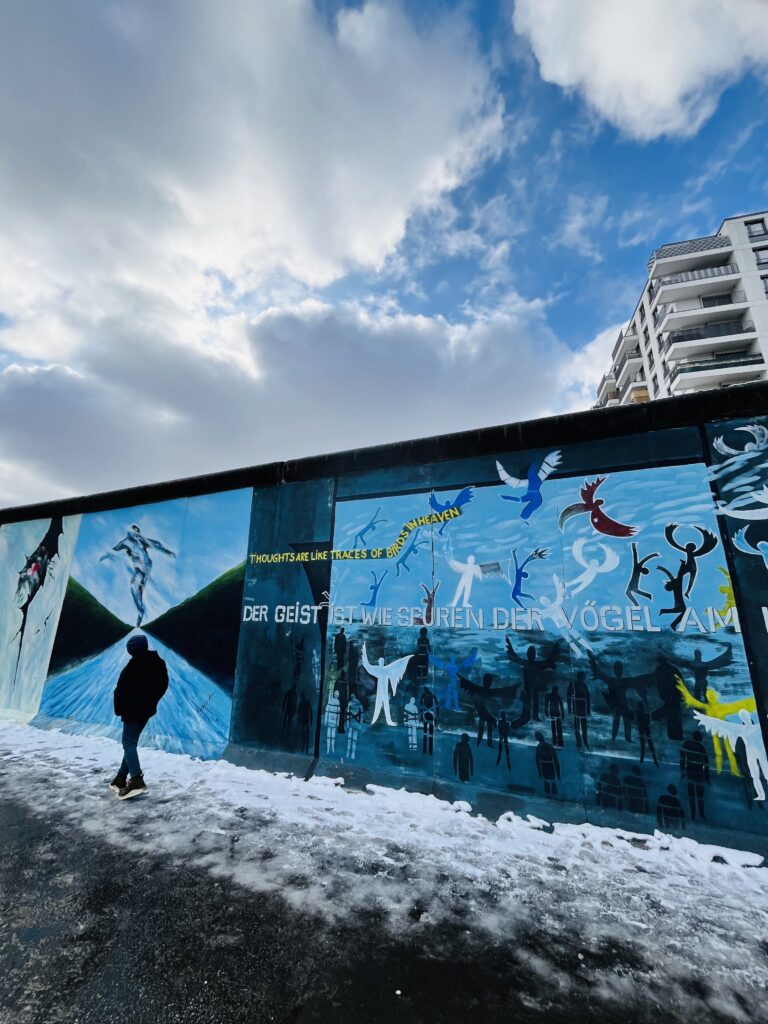
Walking the murals of the remaining sections of the Berlin Wall in East Berlin
Trust that the message is getting through, even in small ways
Your kids won’t become scholars or experts, and they might not remember everything they learned in the moment. That’s ok. As we talked about above, the real win is building a family rhythm of wanting to learn and ask questions.
It’s showing our children that the world is full of stories worth knowing.
Teaching them that other people’s lives matter.
Giving them practice stepping outside of their own time, place, and perspective.
So on your next vacation, consider making a stop at a historic site a part of your family adventure. Let your kids be bored for a little while. Let them surprise you with what catches their attention. Ask questions. Wonder together.
And then go get some ice cream.
Let us know which site you take on in the comments!
For some of our favorite history-focused adventures, check out these posts…


